Sealing Excellence, Securing Industry

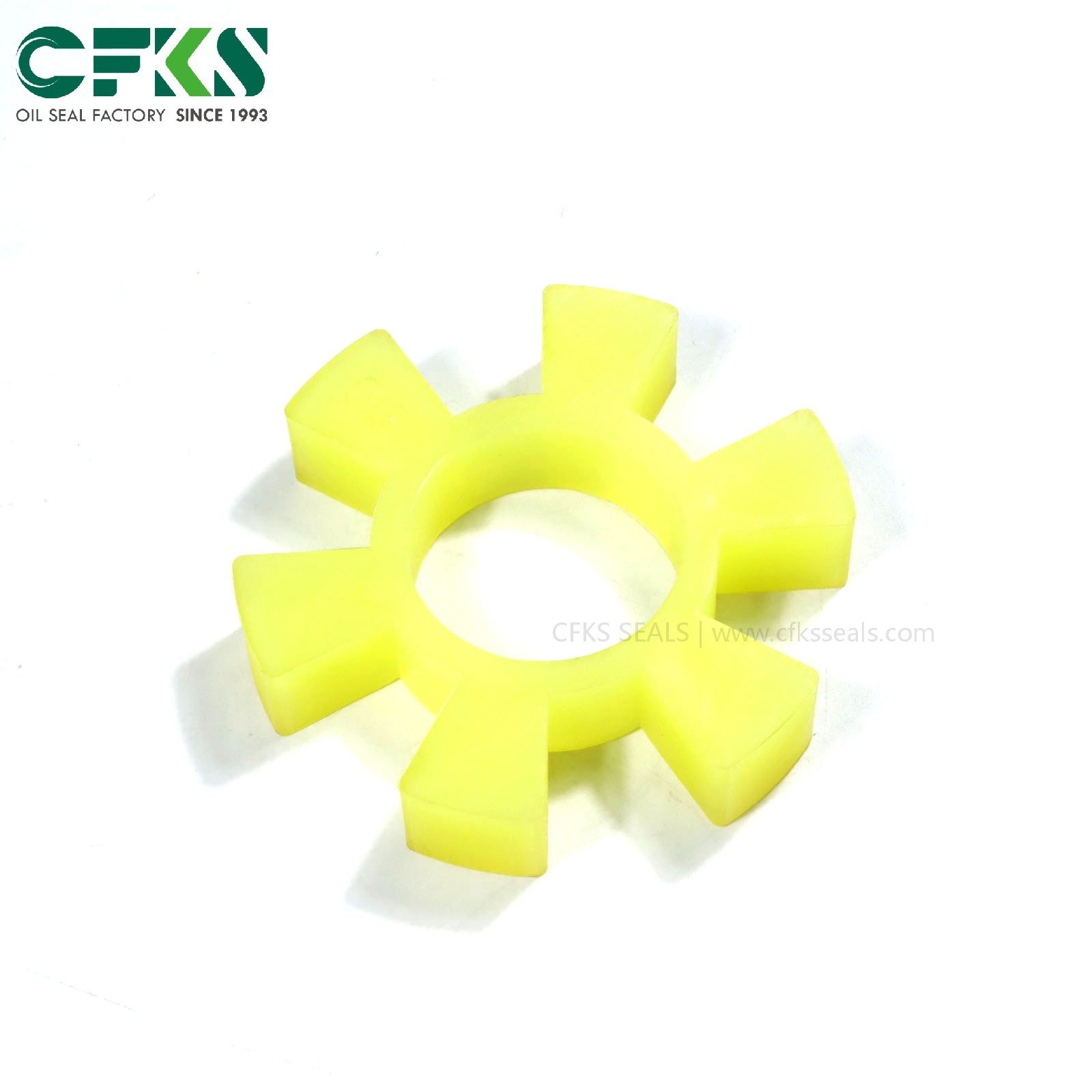
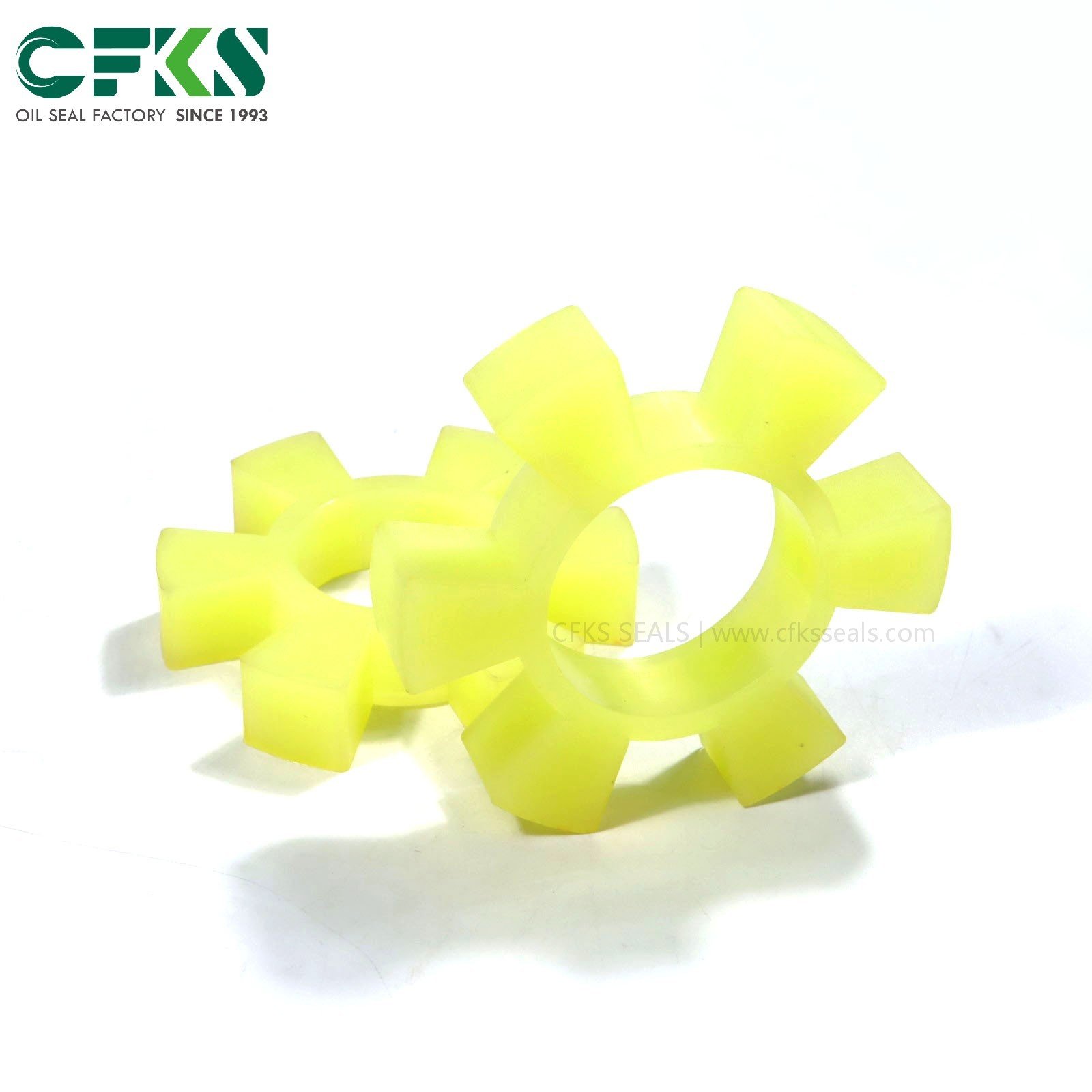
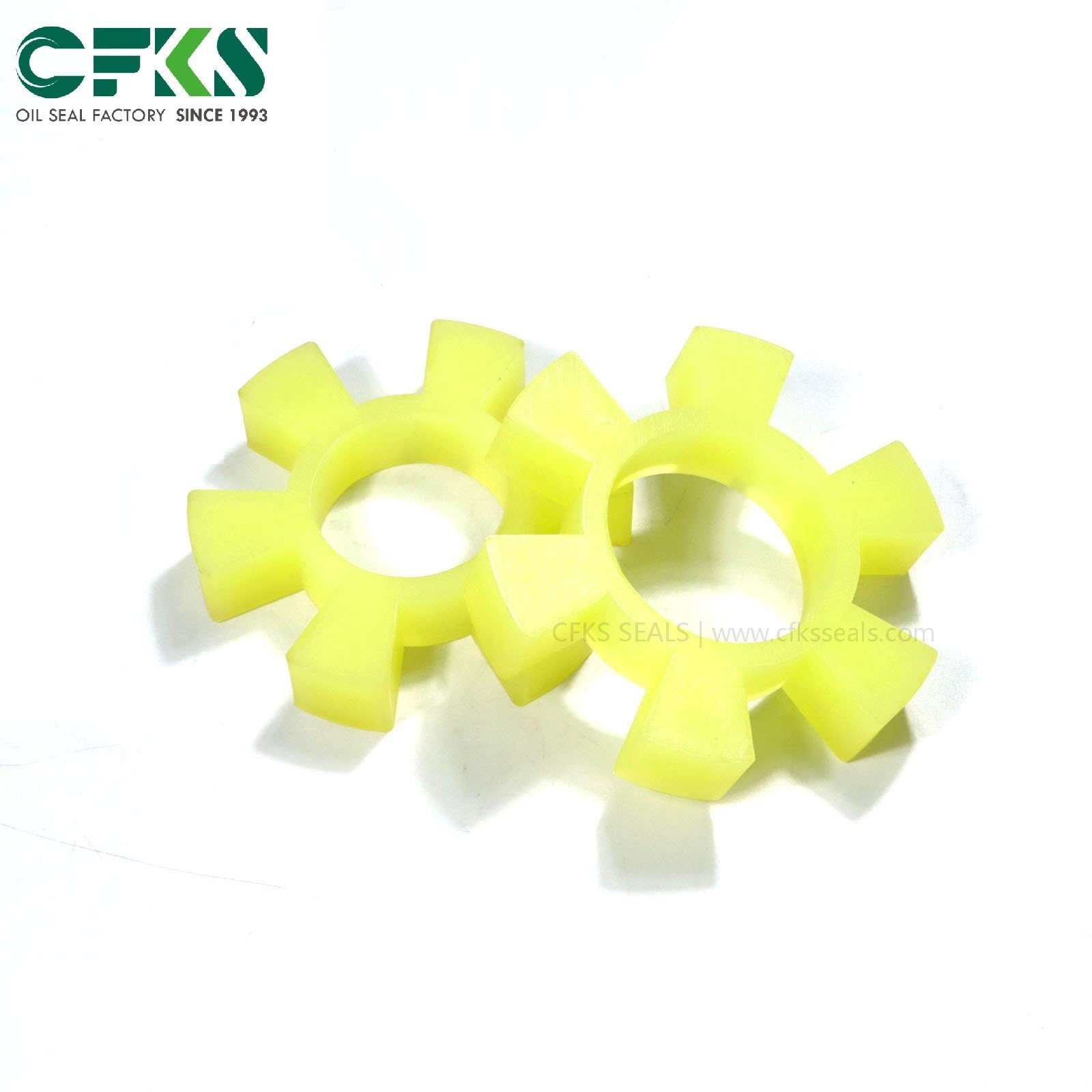
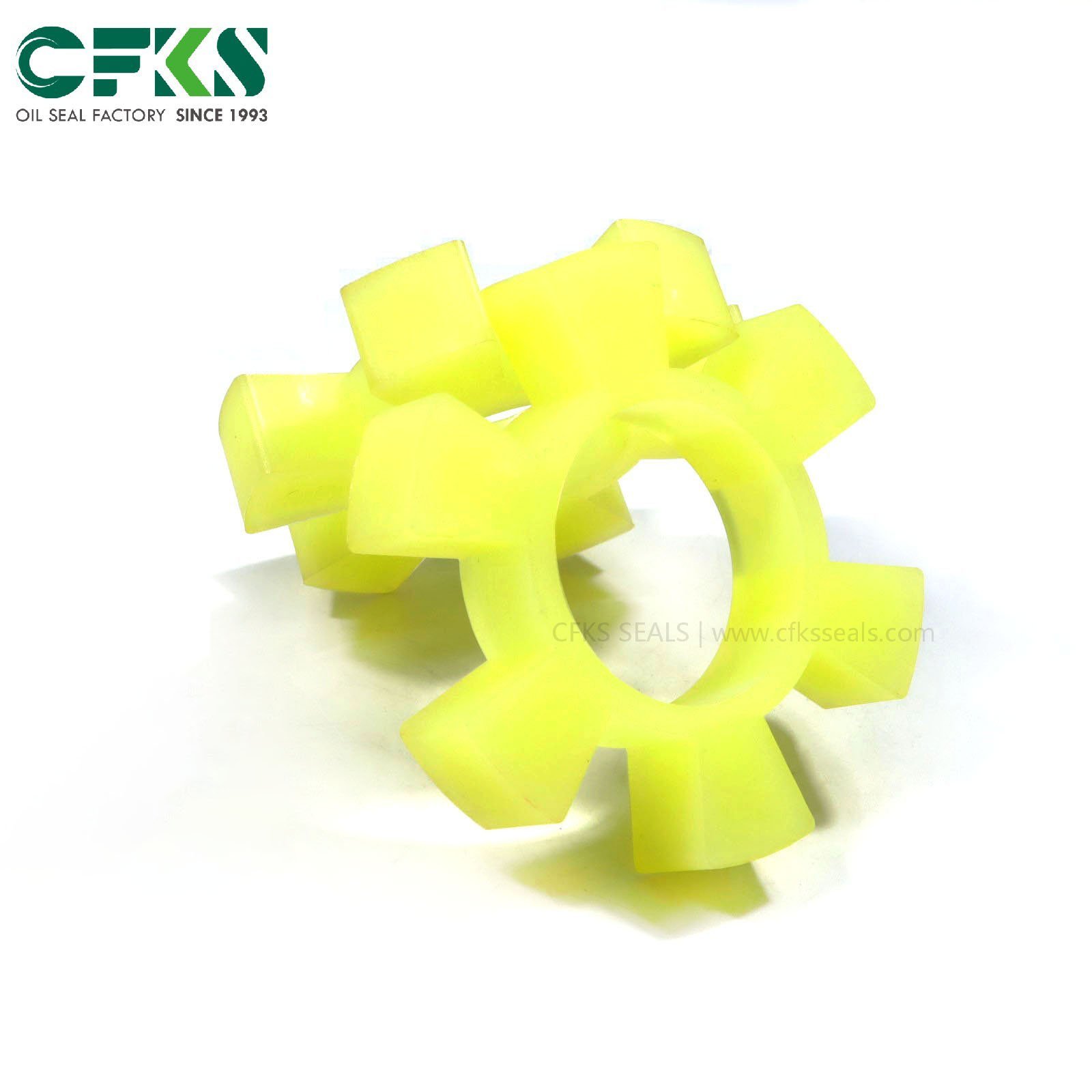
CFKS Yellow PU Coupling Spider Insert High Elasticity Rubber Jaw Coupling Spider

This high-performance PU Coupling Spider Insert is engineered to absorb shock loads and compensate for radial, axial, and angular misalignments in industrial drive systems. Manufactured from premium polyurethane, it provides the perfect balance of flexibility and torsional stiffness for demanding power transmission tasks.

  • Superior Dampening: Effectively reduces noise and vibration to protect motor and gearbox bearings.

  • High Load Capacity: Optimized Shore hardness ensures stable torque transfer even under fluctuating loads.

  • Rapid Replacement: Modular design allows for quick inspection and swap-outs without extensive teardown.

Find your sealing solution with CFKS — contact us for a quote.
Parameter Value Parameter Value
Product Name PU Coupling Spider Insert Specification Standard & Custom Sizes
Material Premium PU / NBR / FKM Feature High Elasticity & Wear Resistance
Work Temp -40°C to 120°C Hardness 90 – 98 Shore A
Type Jaw Coupling Element (GR/MT) Usage Pumps, Conveyors, Compressors, Fans


1️⃣ NBR Jaw Type Coupling Spider for Stable Power Transmission

The Jaw Coupling Spider operates on the principle of compression. As the driving hub rotates, the “legs” of the spider are compressed between the metal jaws of the coupling hubs. This axial engagement allows for a fail-safe design; should the elastomer fail, the metal jaws will lock, preventing a total loss of power while signaling the need for maintenance. The high elasticity of the PU material allows for slight angular and parallel offsets, neutralizing the centrifugal forces that typically cause premature wear in rigid systems.

2️⃣ Wear Resistant & Oil Resistant Performance

While NBR offers standard oil resistance and FKM excels in extreme chemical environments, Polyurethane is the gold standard for coupling inserts due to its exceptional abrasion resistance and tensile strength. CFKS PU inserts are formulated to resist hydrolysis and aging. For standard applications, our 92 Shore A (Yellow/White) PU provides excellent recovery, while for high-torque environments, 98 Shore A (Red) offers increased rigidity and heat resistance up to 100°C, ensuring the spider does not deform under sustained pressure.

3️⃣Standard Size for Easy Installation

The primary operational advantage of the CFKS Spider is its “blind assembly” capability and low-friction interface. Because the PU material is inherently self-lubricating against steel or aluminum hubs, it minimizes heat buildup during high-speed rotation. Maintenance is simplified through visual inspections—any sign of “powdering” or permanent deformation indicates it is time for a replacement. Because the spider is a standalone component, it can often be replaced by simply sliding the hubs back, requiring no specialized pullers or complex realignment tools.

Frequently Asked Questions (FAQ)

Why does my CFKS oil seal fail prematurely? Common causes and prevention tips2025-06-26T15:44:39+08:00

Premature oil seal failure can result from improper installation, poor shaft finish, incorrect material selection, or excessive pressure. To prevent this, ensure the shaft surface is smooth and within tolerance, use correct tools during installation, and choose seals made from materials compatible with your media and temperature.

How to correctly install a CFKS industrial oil seal to avoid leakage2025-06-26T16:04:32+08:00

Always clean the shaft and bore before installation. Use appropriate seal drivers to avoid deformation. Lubricate the lip before fitting to reduce friction during the first rotation. Ensure the seal is seated evenly and not tilted to avoid leaks.

What to do when your CFKS hydraulic seal is leaking under pressure2025-05-20T16:33:14+08:00

Check if the pressure exceeds the seal’s rated limit. Examine for wear, hardening, or improper installation. Replace the seal if damaged, and consider upgrading to a high-pressure CFKS seal variant. Also, verify that the housing and shaft are properly aligned.

How to choose the right CFKS oil seal for extreme operating environments2025-05-20T16:34:39+08:00

For high temperatures, aggressive chemicals, or abrasive environments, choose CFKS seals made of FKM, PTFE, or high-performance elastomers. Consider using seals with protective dust lips or metal casing. Our team can recommend the best fit for your application.


MESSAGE

Go to Top