DKB Hydraulic Wiper Seals: Protecting Hydraulic Cylinders from Contamination in Demanding Industrial Applications
By CFKS SEALSPublished On: 2026-08-18
In the fluid power industry, the reliability of a hydraulic cylinder is intrinsically tied to its sealing system. As hydraulic machinery operates in increasingly severe environments—from deep underground mining operations to heavy-duty earthmoving sites—the risk of external contamination presents a constant threat to mechanical integrity. Airborne dust, abrasive sand, mud, and moisture can rapidly degrade internal components if allowed to breach the cylinder gland.
To mitigate these risks, engineers rely on sophisticated exclusion devices, the most critical of which is the hydraulic wiper seal. Among the various profiles available, the DKB seal has become a highly specified solution for effective contamination control.
As we move through 2026, the industrial landscape is experiencing a rapid shift toward Industry 4.0, smart manufacturing, and the electrification of mobile machinery. Despite the rise of digital hydraulics and predictive maintenance, the fundamental mechanics of physical contamination control remain unchanged. A sensor can monitor a pressure drop, but it cannot physically block abrasive silica from entering a hydraulic system.
This article explores the technical fundamentals of the DKB hydraulic wiper seal, detailing its structure, working principle, material selection, and engineering value for modern industrial and mobile equipment applications.
What Is a DKB Hydraulic Wiper Seal?
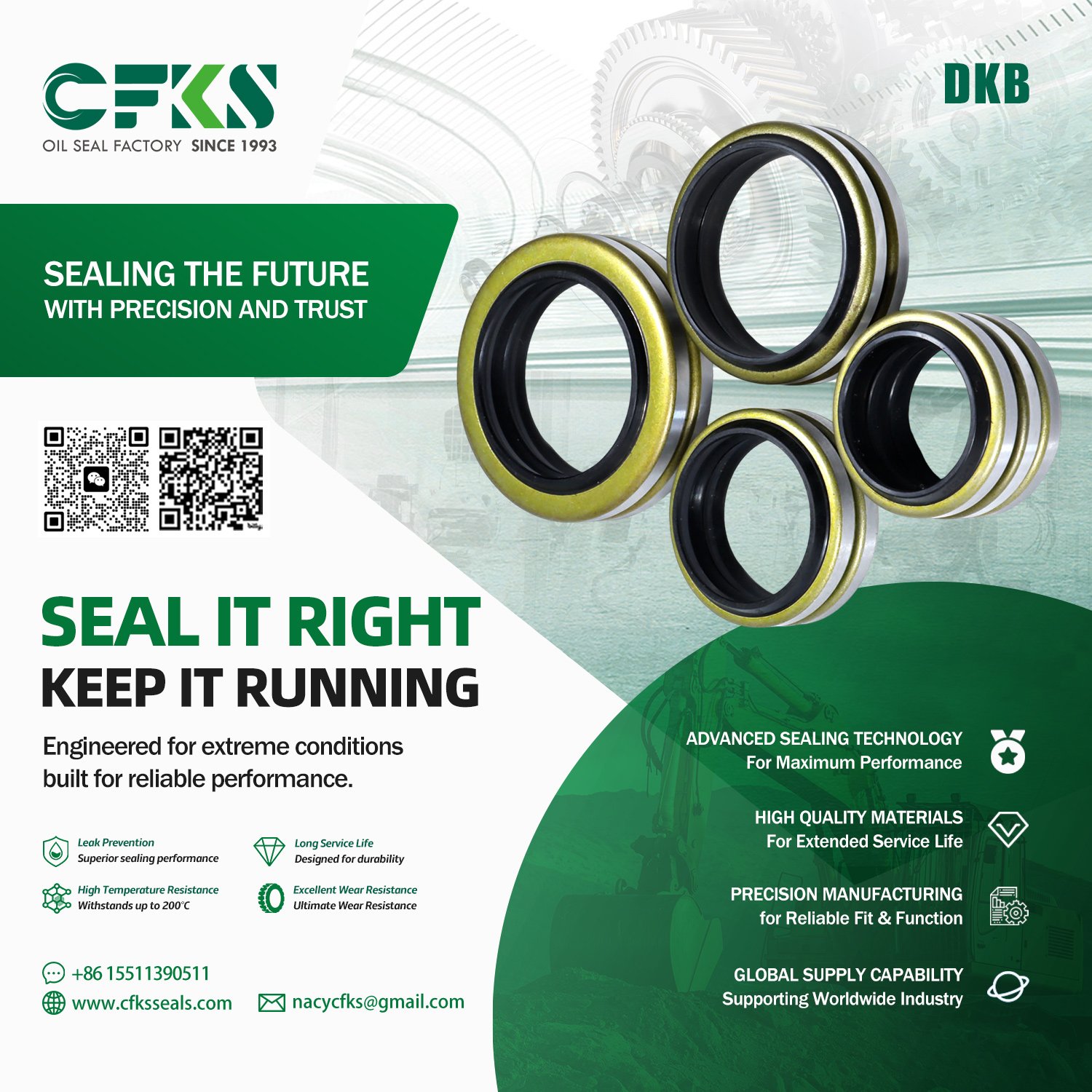
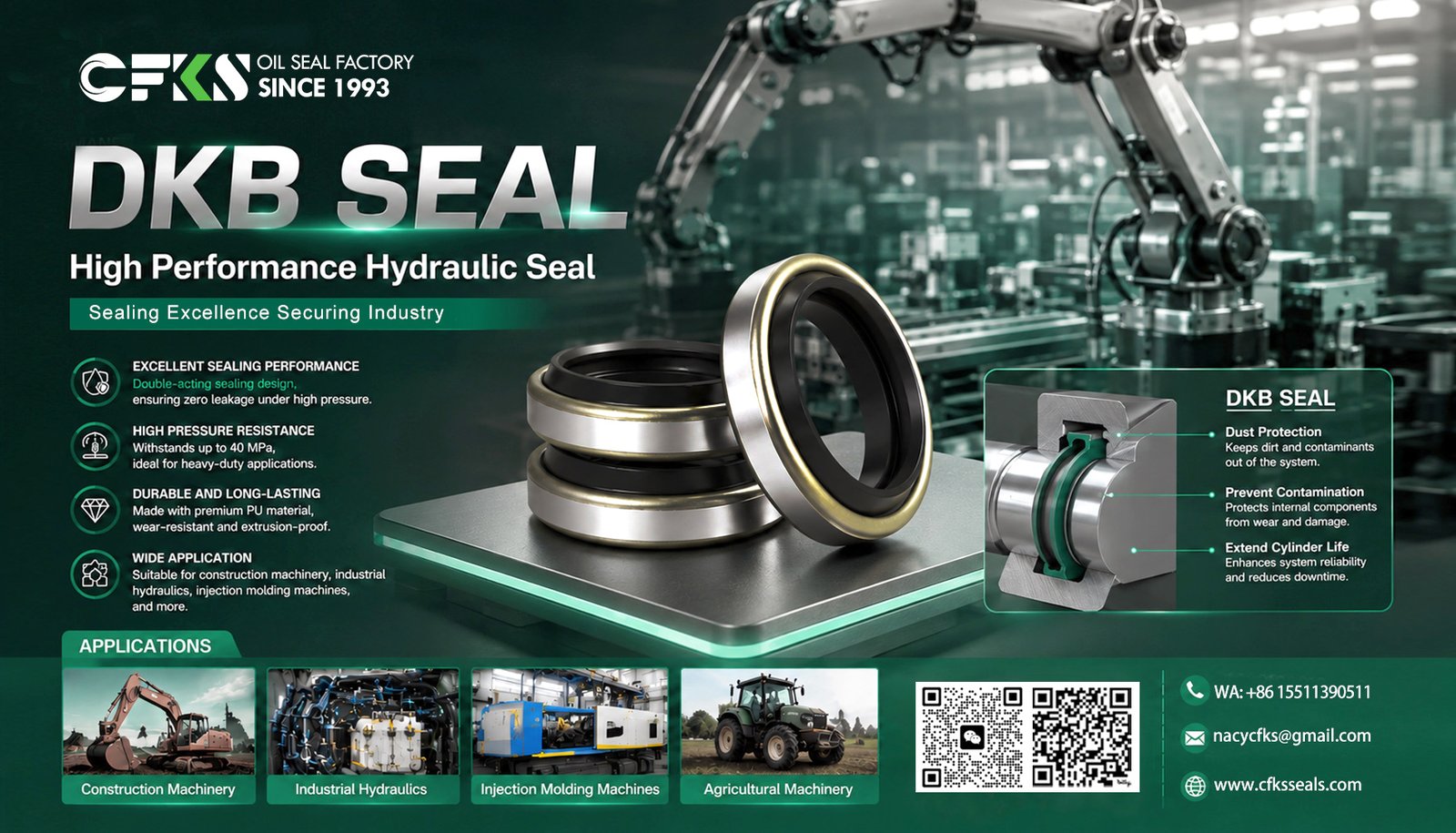
A DKB seal is a specialized exclusion device designed to prevent external contaminants—such as dirt, dust, mud, water, and metallic shavings—from entering a hydraulic cylinder. It is classified as a hydraulic wiper seal, hydraulic dust seal, or rod scraper seal.
The typical installation location for a DKB wiper seal is at the extreme external end of the hydraulic cylinder gland (the cylinder head). It acts as the interface between the external environment and the internal fluid power system. The DKB profile typically features a metal casing (a rigid outer skeleton) bonded to an elastomeric or polymeric wiping lip. The metal casing provides a highly secure, press-fit installation into an open groove housing, ensuring the seal remains firmly in place even under heavy external scraping loads or high-vibration conditions.
Because it is positioned on the external side of the cylinder, the DKB wiper seal serves as the absolute first line of defense. By wiping the retracting piston rod clean, it protects the primary rod seal, the guide rings, and the internal hydraulic fluid from catastrophic contamination.
How Does a DKB Wiper Seal Work?
The working mechanism of a DKB hydraulic wiper seal relies on precise lip geometry, controlled radial sealing force, and constant interaction with the piston rod surface. The process occurs continuously during the reciprocating cycles of the cylinder:
-
Extension: As the hydraulic cylinder actuates, the piston rod extends outward from the cylinder gland, exposing the rod surface to the external operating environment.
-
Exposure: During this extended phase, the rod inevitably collects environmental debris. In a construction setting, this may include wet mud, concrete dust, or abrasive sand. In an industrial setting, it could be metallic dust or chemical residues.
-
Retraction: As the hydraulic pressure reverses and the rod retracts, it pulls toward the interior of the cylinder.
-
Exclusion: The precisely angled wiping lip of the DKB seal maintains a continuous, radial interference fit against the rod. The lip geometry acts like a microscopic plow, scraping the contaminants off the rod’s surface while leaving an extremely thin, necessary film of lubricating oil intact.
-
Protection: Because the debris is physically blocked at the gland, the rod re-enters the cylinder housing clean. Consequently, the internal primary sealing elements, bearings, and hydraulic fluid remain uncompromised.
The engineering effectiveness of a DKB dust seal depends on achieving the correct balance of friction and scraping force. If the radial force is too low, contaminants bypass the lip. If the force is too high, the seal generates excessive frictional heat, leading to premature lip wear and stick-slip phenomena.
Why Contamination Control Matters in Hydraulic Cylinders
Contamination is one of the leading causes of premature hydraulic component degradation. When a hydraulic wiper seal fails to exclude external debris, the resulting cascade of mechanical damage can be extensive.
-
Premature Rod Seal Wear: When abrasive particles bypass the wiper, they become embedded in the softer material of the primary hydraulic rod seal. This turns the rod seal into a grinding wheel, rapidly destroying its ability to retain hydraulic fluid.
-
Rod Scoring: Hard particulates—such as silica sand or rock dust—trapped between the seals and the piston rod will score the chrome plating. Once the rod surface is deeply scratched, no seal can prevent fluid leakage.
-
Guide Ring Damage: Contaminants migrating deeper into the gland will embed into wear rings and guide bands, increasing friction and potentially causing metal-to-metal contact between the rod and the cylinder head.
-
Fluid Degradation: Water and particulate ingress drastically reduce the efficiency and lifespan of the hydraulic fluid. Solid contaminants travel through the system, causing stiction in proportional valves, accelerated pump wear, and clogged filtration systems.
The ultimate consequences of poor contamination control are unexpected machine downtime, costly cylinder rebuilds, increased hydraulic leakage, and a significantly higher Total Cost of Ownership (TCO).
DKB Wiper Seal vs Hydraulic Rod Seal
A common misconception in fluid power maintenance is confusing the wiper seal with the primary rod seal. While both are installed around the piston rod within the cylinder gland, their engineering functions are entirely different and opposing. A DKB seal is NOT a primary hydraulic rod seal.
| Feature | DKB Hydraulic Wiper Seal | Hydraulic Rod Seal |
| Primary Function | Exclusion: Prevents external contaminants (dirt, water) from entering the system. | Retention: Prevents pressurized hydraulic fluid from leaking out of the system. |
| Installation Position | Extreme external side of the cylinder gland facing the environment. | Internal side of the gland housing, positioned behind the wiper seal. |
| Pressure Exposure | Low to zero pressure. Only faces atmospheric pressure. | High pressure. Subjected to full system operating pressure and dynamic spikes. |
| Lip Direction | Scraping lip faces outward toward the external environment. | Sealing lip faces inward toward the pressurized hydraulic fluid. |
| System Role | Protects the rod seal and internal components from abrasive damage. | Maintains system pressure and translates fluid energy into mechanical force. |
In modern hydraulic cylinder design, the DKB wiper seal and the hydraulic rod seal work sequentially. The rod seal contains the high-pressure fluid, while the DKB wiper seal ensures the rod seal operates in a clean, debris-free environment.
DKB Seal Materials and Selection
The operational longevity of a DKB dust seal is heavily dependent on selecting the correct material compound for the intended environment. CFKS and other premier sealing manufacturers offer DKB profiles in various high-performance polymers.
PU (Polyurethane)
Polyurethane is the industry standard for demanding mobile and heavy equipment applications.
-
Advantages: Exceptionally high tensile strength, extreme tear and abrasion resistance, and excellent elasticity. PU can scrape away dried mud, ice, and heavy grit without the lip tearing.
-
Applications: Excavator hydraulic seals, wheel loaders, mining equipment, and construction machinery operating in severe mechanical environments.
NBR (Nitrile Butadiene Rubber)
NBR is widely used for standard industrial sealing solutions.
-
Advantages: Good resistance to mineral-oil-based hydraulic fluids, excellent flexibility at lower temperatures, and highly cost-effective.
-
Applications: Indoor industrial hydraulic equipment, material handling machinery, and automated production lines where environmental contamination is moderate.
FKM (Fluoroelastomer)
FKM is utilized in extreme environments where standard elastomers would degrade.
-
Advantages: Outstanding high-temperature capability and broad chemical resistance. It resists degradation from synthetic hydraulic fluids, aggressive chemicals, and ozone.
-
Applications: Steel mill hydraulics, high-temperature industrial presses, and specialized chemical processing equipment.
Applications of DKB Wiper Seals
The robust, metal-cased design of the DKB wiper seal makes it the preferred choice for heavy-duty and high-vibration applications.
Construction Machinery
Hydraulic cylinders on excavators, bulldozers, and wheel loaders face some of the harshest conditions on the planet. The cylinders operating the boom, arm, and bucket are constantly exposed to wet mud, concrete dust, and heavy shock loading. DKB wipers engineered from tough polyurethane protect these critical actuators from immediate failure.
Mining Equipment
In underground and open-pit mining, equipment must endure highly abrasive rock particles, coal dust, and non-stop operational cycles. A heavy-duty wiper seal is essential to prevent abrasive dust from scoring high-value piston rods and to ensure the equipment meets expected maintenance intervals.
Agricultural Machinery
Tractors, harvesters, and forestry equipment operate outdoors, exposing hydraulic steering and lift cylinders to soil, moisture, and chemical fertilizers. A correctly specified DKB seal prevents soil ingress and protects the system from corrosion-inducing moisture.
Industrial Hydraulic Equipment
In automated factories, hydraulic presses, injection molding machines, and robotic actuators utilize DKB seals to keep manufacturing byproducts (such as metal shavings or plastic dust) away from precision hydraulic components, ensuring repeatable and smooth actuation.
Marine and Offshore Equipment
For offshore cranes, deck machinery, and marine steering gear, moisture and saltwater exposure are the primary threats. While a standard NBR DKB seal is effective for general dust, marine applications often require specialized material selection (and sometimes specialized metal casing coatings) to prevent saltwater corrosion and fluid contamination.
DKB Seals in Modern Heavy Equipment
The heavy equipment industry in 2026 is defined by the integration of smart technologies. We are seeing a rapid adoption of electrified construction machinery, hybrid power systems, and digital hydraulics featuring advanced condition monitoring.
However, it is a critical engineering reality that electrification does not eliminate hydraulic systems. High-force linear motion, shock absorption, and extreme power density are still best achieved through hydraulic cylinders. While an intelligent hybrid excavator may use an electric drive for swing operations, its boom and bucket remain hydraulic.
Furthermore, predictive maintenance protocols rely on components achieving their expected lifespans. A sensor may alert an operator that hydraulic fluid pressure is dropping, but the root cause of that failure is often physical—such as dirt destroying a rod seal. Therefore, even as machinery becomes highly digital, the physical barrier provided by a DKB wiper seal remains an indispensable requirement for maximizing equipment uptime and realizing the true value of predictive maintenance.
Common DKB Seal Failure Modes
Like all dynamic mechanical components, hydraulic wiper seals will eventually wear out. However, identifying the root cause of premature failure is crucial for maintenance engineers.
-
Lip Wear and Hardening: Continuous scraping against a dry or rough rod surface causes the lip to wear flat. Exposure to temperatures exceeding the material’s limits will cause the lip to harden, crack, and lose its radial elasticity.
-
Permanent Deformation: Excessive side loading on the piston rod or severe impacts can compress the wiper lip, causing permanent set where the lip no longer contacts the rod evenly.
-
Chemical Degradation: If an NBR wiper is exposed to incompatible synthetic fluids or harsh environmental chemicals, the material may swell, soften, or disintegrate.
-
Rod Surface Damage: If the chrome plating on the piston rod is already pitted or scratched, it will act like a file, rapidly chewing away the wiper seal lip on every stroke.
Symptoms of Failure: Operators and maintenance personnel should look for dirt accumulating heavily around the cylinder gland, visible tearing on the wiper lip, or a thin film of grit bypassing the wiper and adhering to the rod near the main seal.
How to Select and Install a DKB Wiper Seal
Selecting the correct DKB dust seal requires careful engineering consideration to ensure optimal performance.
Selection Checklist:
-
Dimensions: Match the seal accurately to the rod diameter and the exact dimensions of the housing groove (inner diameter, outer diameter, and width). The press-fit relies on exact tolerances.
-
Material: Base the material choice on operating temperature, rod speed, environmental contamination level, and fluid compatibility.
-
Surface Condition: Ensure the piston rod meets the recommended surface roughness parameters (typically Ra 0.1 to 0.3 µm for dynamic surfaces).
Installation Best Practices:
-
Cleanliness: Thoroughly clean the installation area and the groove before fitting the seal.
-
Inspection: Check the rod for existing burrs, scratches, or weld spatter that could slice the seal during installation.
-
Tooling: Use appropriate press tools that apply even force to the metal casing of the DKB seal. Never strike the sealing lip directly.
-
Orientation: Confirm the wiping lip faces outward, toward the external environment.
Why Choose CFKS DKB Seals?
For global OEM manufacturers, hydraulic cylinder builders, and maintenance professionals, the quality of the sealing system defines the reputation of the equipment. CFKS is a German-authorized industrial sealing brand with deep expertise in fluid power applications.
-
Hydraulic Sealing Expertise: We specialize in high-performance hydraulic sealing systems, offering reliable DKB wiper seal solutions that perform under extreme conditions.
-
Precision Manufacturing: CFKS DKB seals are manufactured with strict dimensional consistency, ensuring a reliable press-fit and optimal radial lip interference.
-
Multiple Material Options: Our seals are available in premium polyurethane (PU), NBR, and FKM compounds to match your specific environmental and thermal requirements.
-
Customized Sealing Solutions: CFKS provides OEM and aftermarket support, offering customized dimensions and profiles for unique machinery applications.
-
Global Distribution & Technical Support: We partner with hydraulic seal distributors worldwide, providing dependable supply chains and professional technical consultation for fluid power engineers.
Conclusion
The DKB hydraulic wiper seal may be a small component in terms of size, but its impact on the reliability of hydraulic equipment is massive. By acting as the primary barrier against abrasive dust, mud, and moisture, the DKB seal protects expensive piston rods, internal sealing elements, and the hydraulic fluid itself.
Whether designing next-generation hybrid construction machinery or maintaining heavy-duty mining equipment, selecting the right wiper seal material and profile is an essential engineering step toward reducing downtime and optimizing the Total Cost of Ownership.
Contact CFKS for Industrial Sealing Solutions
Are you an OEM purchasing manager, hydraulic cylinder manufacturer, or industrial distributor seeking reliable contamination control solutions? Contact CFKS today. Our technical team is ready to assist you with DKB wiper seal selection, customized hydraulic sealing solutions, OEM/ODM cooperation, and expert fluid power consultation.
FAQ
1. What is a DKB seal?
A DKB seal is a metal-cased hydraulic wiper seal (or dust seal) designed to scrape dirt, dust, mud, and moisture off a retracting piston rod, preventing external contaminants from entering a hydraulic cylinder.
2. Is a DKB seal a hydraulic rod seal?
No. A DKB seal is an exclusion device (wiper) designed to keep dirt out. A hydraulic rod seal is a fluid retention device designed to keep high-pressure hydraulic fluid inside the cylinder. They are distinct components that work together.
3. What is the function of a DKB wiper seal?
Its primary function is to physically block external environmental debris from migrating past the cylinder gland, thereby protecting internal seals, guide rings, and hydraulic fluid from abrasive wear and contamination.
4. Where are DKB wiper seals used?
They are used in heavy-duty hydraulic applications, including construction machinery (excavators, loaders), mining equipment, agricultural tractors, industrial hydraulic presses, and automated manufacturing systems.
5. What materials are available for DKB seals?
Common materials include Polyurethane (PU) for high abrasion resistance in heavy equipment, NBR for standard industrial environments and mineral oils, and FKM for high-temperature or chemically aggressive applications.
6. Can DKB seals be used in excavators?
Yes. DKB seals made of heavy-duty polyurethane are widely specified for excavator hydraulic cylinders because their metal casing ensures a secure fit against high vibration, and the PU lip resists tearing from dried mud and rock dust.
7. What causes a hydraulic wiper seal to fail?
Failure can be caused by exposure to temperatures exceeding the material’s limit, operating on a deeply scratched or damaged piston rod, chemical incompatibility, extreme side-loading, or simply reaching the end of its mechanical fatigue life.
8. How do I select the correct DKB seal?
Selection requires matching the rod diameter and housing groove dimensions exactly, and choosing a material (PU, NBR, FKM) that aligns with your operating temperature, rod speed, and environmental contamination levels.
9. How can contamination affect hydraulic cylinders?
Contamination leads to scored piston rods, rapid wear of primary rod seals, degradation of guide rings, and contaminated hydraulic fluid, which ultimately causes cylinder leakage, valve stiction, and system failure.
SEO Keyword Strategy Table
| Keyword | Search Intent | Keyword Type | Primary / Secondary | Recommended Article Section | Commercial Potential |
| Product Keywords | |||||
| DKB Seal | Informational / Transactional | Short-tail | Primary | Throughout | High |
| DKB Wiper Seal | Informational / Transactional | Exact Match | Primary | Introduction, What Is a DKB | High |
| DKB Dust Seal | Informational | Synonym | Primary | What Is a DKB, FAQ | Medium |
| Heavy Duty Wiper Seal | Transactional | Descriptive | Secondary | Applications, Materials | High |
| Hydraulic Cylinder Wiper | Informational / Transactional | Component | Secondary | How it Works | High |
| Application Keywords | |||||
| Wiper Seal for Hydraulic Cylinder | Transactional | Application | Secondary | Selection, FAQ | High |
| Construction Machinery Seal | Navigational / Transactional | Industry | Secondary | Applications | High |
| Excavator Hydraulic Seal | Transactional | Industry | Secondary | Applications, Materials | Very High |
| Industrial Hydraulic Sealing Solutions | Navigational | B2B Service | Secondary | Why Choose CFKS, Conclusion | High |
| Technical Keywords | |||||
| Hydraulic Wiper Seal vs Rod Seal | Informational | Comparison | Long-tail | DKB vs Rod Seal Section | Low (Educational) |
| How Does a DKB Seal Work | Informational | Educational | Long-tail | How Does a DKB Wiper Seal Work | Low |
| DKB Seal Material Selection | Informational / Commercial | Technical | Long-tail | Materials and Selection | Medium |
| Failure Analysis Keywords | |||||
| Hydraulic Wiper Seal Failure | Informational | Troubleshooting | Long-tail | Common Failure Modes | Low |
| How contamination affects hydraulic cylinders | Informational | Educational | Long-tail | Why Contamination Control Matters | Low |
| Material Keywords | |||||
| PU Hydraulic Wiper | Transactional | Material-specific | Secondary | Materials | High |
| NBR Dust Seal | Transactional | Material-specific | Secondary | Materials | Medium |
| FKM Wiper Seal | Transactional | Material-specific | Secondary | Materials | Medium |
| Commercial Keywords | |||||
| Hydraulic Seal Manufacturer | Transactional / Navigational | B2B Intent | Primary | Why Choose CFKS, Conclusion | Very High |
| Hydraulic Cylinder Wiper Seal Manufacturer | Transactional | B2B Intent | Long-tail | Why Choose CFKS, Conclusion | Very High |
| Hydraulic Seal Supplier | Transactional | B2B Intent | Secondary | Why Choose CFKS, Intro | High |
| CFKS Branded Keywords | |||||
| CFKS Seals | Navigational | Brand | Secondary | Intro, Why Choose CFKS | Medium |
| CFKS DKB Wiper Seals | Navigational / Transactional | Brand + Product | Long-tail | Why Choose CFKS | High |
Share this article
Latest articles
October 4, 2026