Stainless Steel Oil Seals: Advanced Sealing Solutions for Corrosive and High-Performance Industrial Applications
In the rapidly evolving landscape of modern industrial manufacturing, rotating machinery operates under increasingly severe conditions. As we progress through 2026, the transition toward Industry 4.0, smart manufacturing, and continuous automation demands unprecedented reliability from mechanical components. Unplanned equipment downtime is no longer just a maintenance issue; it is a critical disruption to the entire digital supply chain.
Within this high-stakes environment, the integrity of rotary equipment—such as pumps, gearboxes, and motors—relies heavily on the performance of dynamic shaft seals. While standard carbon steel oil seals suffice for general, dry applications, they quickly succumb to oxidation, structural degradation, and galvanic corrosion when exposed to harsh chemicals, marine salinity, or rigorous washdown protocols.
To bridge this operational gap and optimize the Total Cost of Ownership (TCO), industrial equipment manufacturers are increasingly specifying Stainless Steel Oil Seals. As a German-authorized industrial sealing brand, CFKS engineers high-performance sealing solutions that combine advanced metallurgy with cutting-edge polymer science to protect critical rotating components, extend maintenance intervals, and drive sustainable industrial development.
What Is a Stainless Steel Oil Seal?
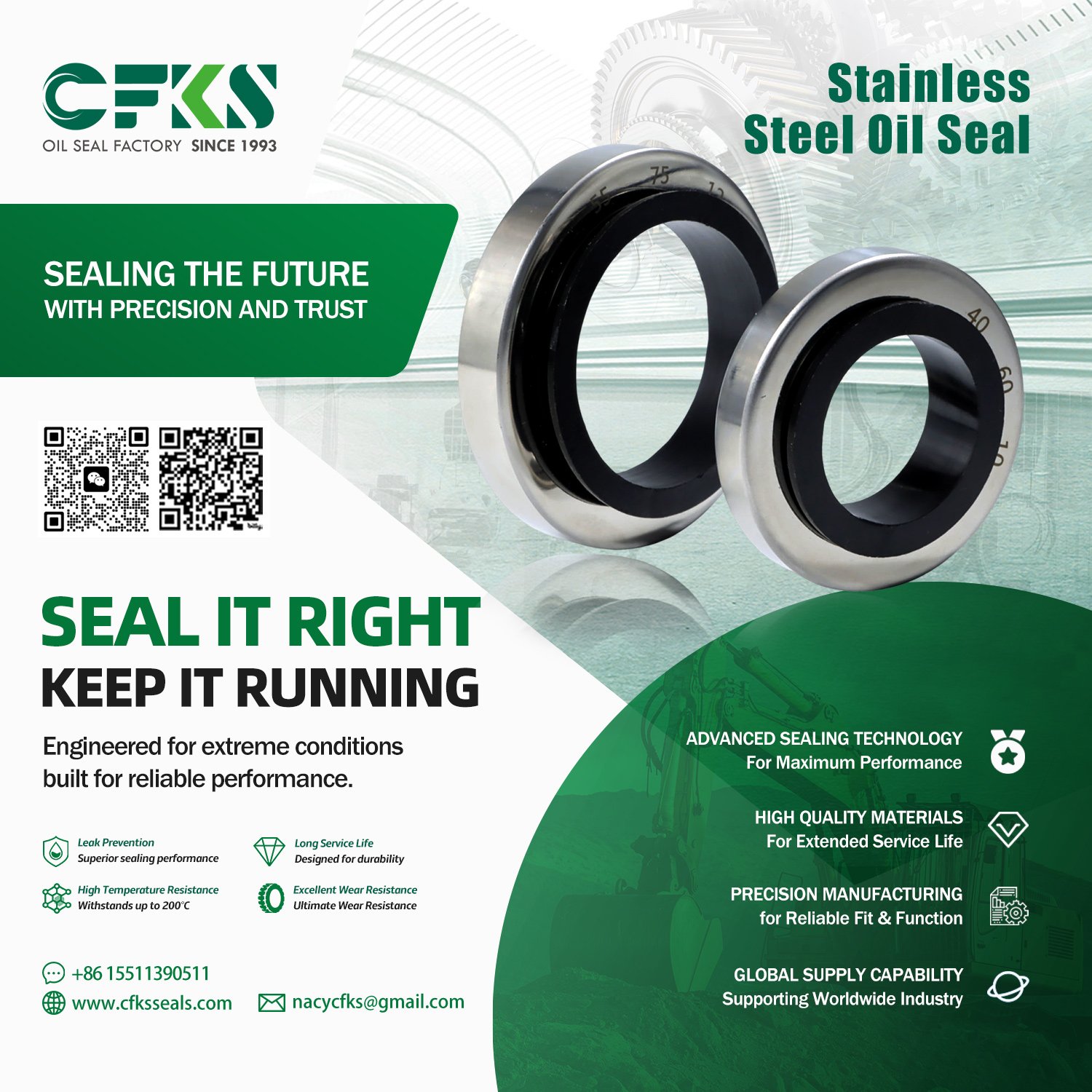
A Stainless Steel Oil Seal is a highly engineered rotary shaft sealing device designed to close the dynamic gap between a rotating, oscillating, or reciprocating shaft and its stationary housing. Its primary purpose is to retain vital system lubricants while simultaneously excluding external environmental contaminants.
The Difference Between Standard and Stainless Steel Oil Seals
Conventional Industrial Oil Seals are typically manufactured with cold-rolled carbon steel (such as SPCC) for their outer casings and internal reinforcement frames. While cost-effective, carbon steel rusts rapidly in the presence of moisture, acids, or alkalis.
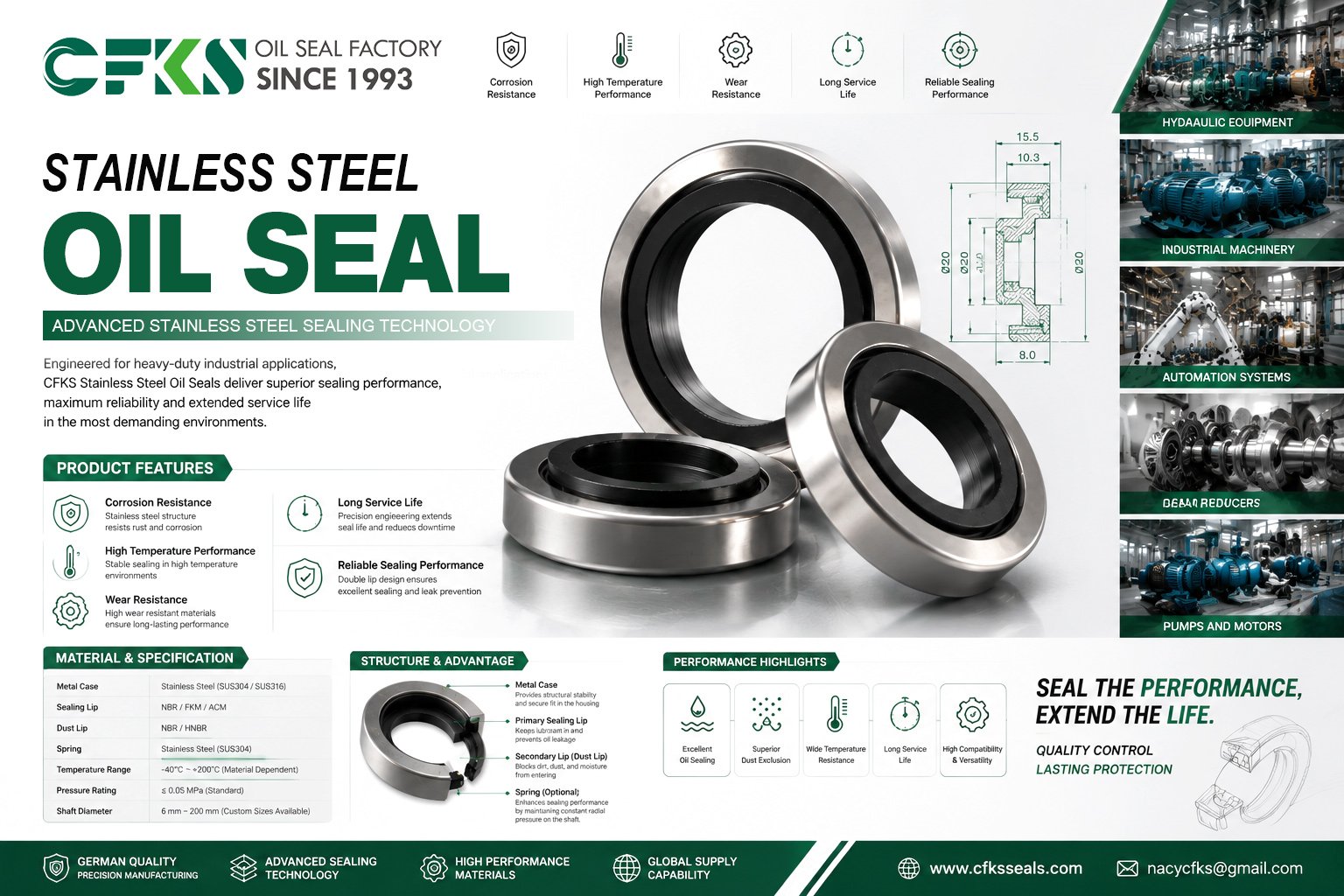
A stainless steel variant replaces all metallic components—both the rigid outer casing and the internal garter spring—with premium austenitic stainless steel (typically SUS304 or SUS316). This metallurgical upgrade renders the seal entirely immune to surface oxidation, preventing rust-induced casing distortion and ensuring the seal remains firmly seated within the bore over its entire service life.
The Rotary Shaft Sealing Mechanism
The operational mechanism of a Stainless Steel Rotary Shaft Seal is rooted in tribology and fluid dynamics. When the shaft rotates, the sealing lip does not create a completely dry friction state. Instead, the engineered radial force of the lip creates a microscopic hydrodynamic fluid film (typically 1 to 3 micrometers thick). This meniscus acts as a fluid barrier that prevents bulk lubricant leakage while minimizing frictional heat and shaft wear.
Core Functions in Equipment Reliability
Implementing stainless steel oil seals provides four fundamental mechanical benefits:
-
Prevent Lubricant Leakage: Secures synthetic oils, heavy greases, and process fluids within the bearing chamber or gearbox housing.
-
Block External Contaminants: Acts as an impermeable physical barrier against water ingress, chemical washdown fluids, abrasive dust, and salt spray.
-
Protect Bearings and Rotating Components: Eliminates the risk of iron oxide (rust) flaking off the seal casing and migrating into precision bearing races.
-
Extend Equipment Service Life: By maintaining optimal lubrication and resisting chemical attack, these seals dramatically reduce the frequency of catastrophic bearing and shaft failures.
How Stainless Steel Oil Seals Work: Structure and Design
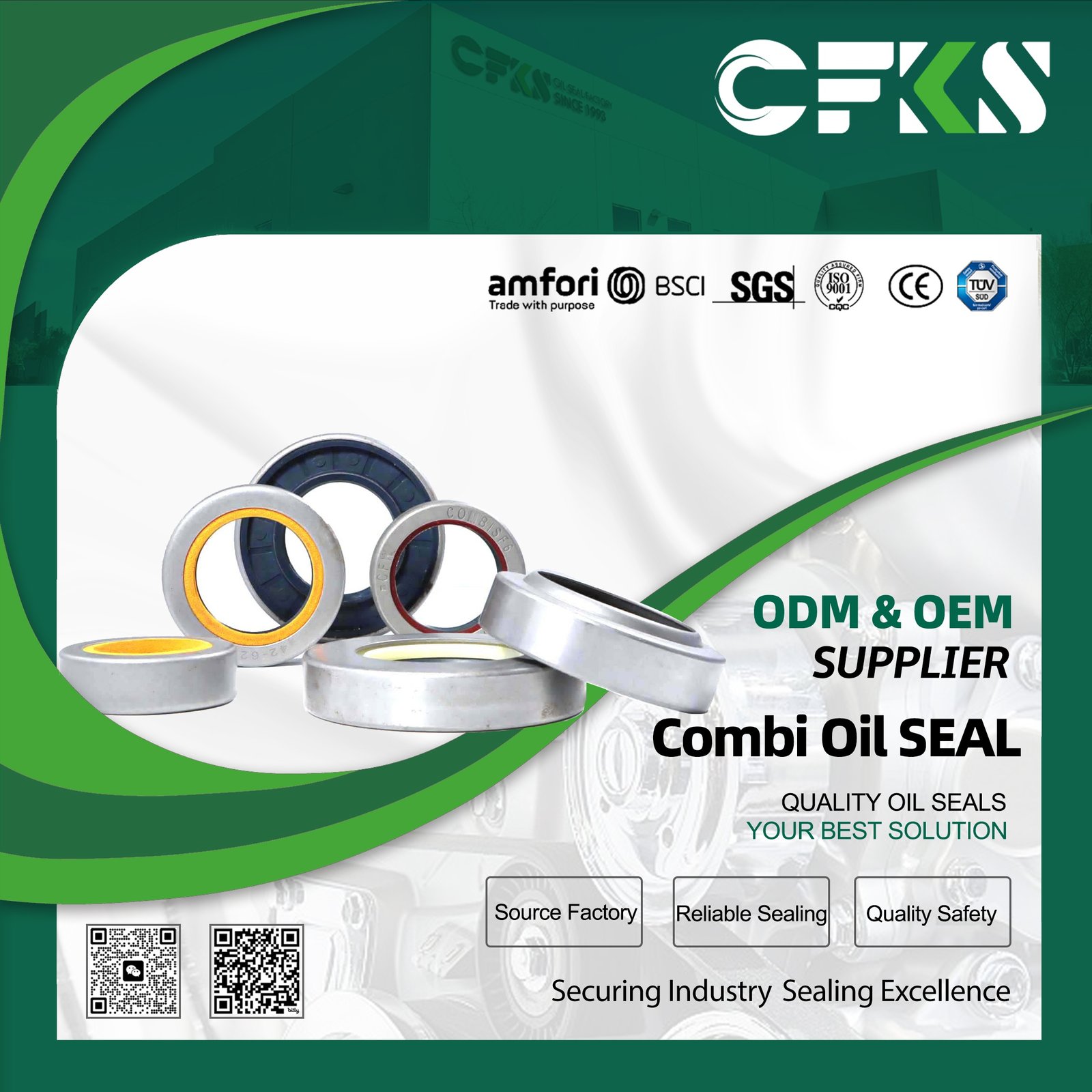
The superior performance of a Metal Cased Oil Seal in harsh environments is achieved through the precise integration of three key structural components.
1. The Stainless Steel Housing
The outer metal casing serves as the structural foundation of the seal.
-
Corrosion Resistance: It withstands aggressive ambient conditions without degrading.
-
Mechanical Strength and Dimensional Stability: The rigid steel shell is machined to precise outer diameter (OD) tolerances, ensuring a secure interference fit (press-fit) within the machine housing bore. This stability prevents the seal from twisting or shifting axially during thermal expansion or severe pressure spikes.
-
Protection in Harsh Environments: In external applications, the exposed stainless steel face acts as an armor shield against direct mechanical impact and high-pressure fluid jets.
2. The Rubber Sealing Lip
The elastomeric or fluoropolymer lip is the functional heart of the seal.
-
Dynamic Sealing Performance: The lip geometry is precision-molded with highly specific angles (the air side and the fluid side) to direct the hydrodynamic pumping action back toward the lubricant reservoir.
-
Wear Resistance: Advanced polymers are formulated to resist mechanical abrasion from both the rotating shaft and external particulates.
-
Compatibility: The lip material is specifically matched to the tribological characteristics of the system’s lubricant to prevent chemical swelling or hardening.
3. The Spring Design
A helically wound garter spring is seated in a groove directly behind the primary sealing lip.
-
Maintaining Radial Sealing Force: Elastomers naturally experience stress relaxation and compression set over time, especially at elevated temperatures. The spring applies continuous, uniform radial clamping force around the circumference of the shaft.
-
Stable Sealing Performance: To prevent stress-corrosion cracking, the spring in a stainless steel oil seal is also manufactured from high-grade stainless steel wire, ensuring it does not snap or corrode when exposed to moisture.
Stainless Steel Materials and Rubber Compound Selection
The success of Industrial Sealing Solutions depends on specifying the correct combination of metallurgy and polymer science for the intended operating environment.
Stainless Steel Materials
SUS304 Stainless Steel (AISI 304)
SUS304 is a highly versatile austenitic chromium-nickel alloy (typically 18% chromium, 8% nickel).
-
General Corrosion Resistance: It offers excellent protection against atmospheric oxidation, water, and organic chemicals.
-
Applications: Widely used as a Food Grade Oil Seal casing in food and beverage processing, general industrial washdown zones, and pharmaceutical packaging where general rust prevention is required.
SUS316 Stainless Steel (AISI 316)
SUS316 incorporates an addition of 2% to 3% molybdenum, which drastically alters its resistance to localized corrosion.
-
Higher Corrosion Resistance: The molybdenum prevents pitting and crevice corrosion in chloride-rich environments.
-
Applications: Essential for marine environments, offshore platforms, wastewater treatment plants, and aggressive chemical processing machinery.
Rubber and Polymer Materials
NBR (Nitrile Butadiene Rubber)
-
Characteristics: Offers exceptional oil resistance, high tensile strength, and good abrasion resistance. Operates effectively between -30 C and 100 C.
-
Applications: A cost-effective solution for standard gearboxes, electric motors, and hydraulic applications operating with mineral oils in non-extreme temperatures.
FKM (Fluoroelastomer)
-
Characteristics: Features strong carbon-fluorine bonds, granting it extraordinary thermal and chemical stability. It operates continuously at temperatures up to 200 C and resists aggressive synthetic lubricants, acids, and fuels.
-
Applications: The definitive choice for a High Temperature Oil Seal or Chemical Resistant Oil Seal, ideal for chemical pumps, high-speed spindles, and industrial ovens.
PTFE (Polytetrafluoroethylene)
-
Characteristics: An engineered fluoropolymer with a near-zero coefficient of friction and universal chemical inertness (pH 0-14). It can operate from -80 C up to 260 C.
-
Applications: High-performance applications requiring dry-running capabilities, ultra-high surface speeds, or absolute chemical purity, such as semiconductor manufacturing or severe pharmaceutical reactors.
Material Comparison Strategy
When specifying a seal, mechanical engineers must cross-reference four parameters:
-
Temperature Resistance: Ensure the ambient and frictional heat does not exceed the polymer’s thermal threshold.
-
Chemical Compatibility: Match the lip material to the specific synthetic oil, grease, or process fluid.
-
Corrosion Resistance: Select SUS304 for general washdown, and SUS316 for high-chloride or marine environments.
-
Operating Environment: Consider external factors like abrasive dust (requires dust lips) or high-pressure spray.
Key Advantages of Stainless Steel Oil Seals
1. Excellent Corrosion Resistance
In chemical equipment and marine machinery, airborne salts and corrosive vapors bypass external shielding. Stainless steel seals prevent the galvanic corrosion that would otherwise fuse a carbon-steel seal to the housing bore, making maintenance impossible and risking severe damage to the machine casing during extraction.
2. High Temperature Performance
In high-temperature machinery such as industrial ovens, smelting equipment, and heavy processing machinery, thermal cycling causes standard metals to warp. Stainless steel maintains its mechanical yield strength and dimensional stability at elevated temperatures, ensuring the seal remains securely press-fitted while the FKM or PTFE lip manages the extreme heat.
3. Longer Service Life and TCO Optimization
By combining rust-proof casings with premium elastomers, these seals drastically reduce the frequency of component failure. Reduced replacement frequency translates directly to lower maintenance labor costs, fewer spare parts in inventory, and significantly improved equipment reliability—aligning perfectly with modern Total Cost of Ownership (TCO) optimization strategies.
4. Hygienic and Clean Applications
Food processing, pharmaceutical equipment, and beverage machinery are subjected to rigorous Clean-In-Place (CIP) and Sterilization-In-Place (SIP) procedures using caustic chemicals and high-pressure steam. Stainless steel seals do not corrode or harbor bacteria, ensuring full compliance with FDA and international hygiene standards.
Industrial Applications
As an elite Oil Seal Manufacturer, CFKS designs stainless steel solutions tailored for a vast array of critical industrial sectors:
-
Food Processing & Beverage Machinery: Agitators, commercial mixers, and bottling conveyors requiring daily high-pressure chemical washdowns.
-
Pharmaceutical Equipment: Centrifuges and sterile compounding reactors requiring absolute chemical inertness and zero metallic particulate shedding.
-
Chemical Processing Machinery: Transfer pumps and metering valves handling highly corrosive acids, bases, and volatile organic solvents.
-
Marine Equipment & Offshore Systems: Propeller shafts, bow thrusters, and offshore winches exposed to continuous salt spray and submersion.
-
Pumps, Motors, & Gearboxes: Industrial fluid handling systems requiring long-term reliability without casing rust.
-
Industrial Fans & Blowers: High-speed exhaust fans operating in chemically aggressive exhaust streams.
-
Hydraulic Equipment: Heavy-duty cylinders operating in offshore or subterranean mining environments.
-
Semiconductor Manufacturing Equipment: Ultra-clean vacuum pumps and wafer handling robotics requiring outgas-free, highly pure PTFE sealing components.
-
Packaging Machinery: High-speed automated systems demanding long maintenance intervals to support Industry 4.0 continuous production.
-
Renewable Energy & Wind Turbines: Offshore wind turbine pitch and yaw gearboxes, where the cost of maintenance access is exceptionally high, demanding absolute seal reliability.
Common Failure Causes and Solutions
Even the most advanced seals can fail if applied incorrectly. Understanding these failure modes is essential for maintenance professionals.
-
Corrosion Damage (Pitting): Standard SUS304 can pit in highly concentrated salt water.
-
Recommendation: Upgrade to SUS316 stainless steel for true marine-grade corrosion resistance.
-
-
Rubber Aging & Thermal Hardening: Continuous operation above a material’s temperature limit causes elastomers to cross-link, harden, and crack.
-
Recommendation: Upgrade from NBR to FKM or PTFE for high-temperature zones.
-
-
Shaft Wear (Grooving): Abrasive particles trapped beneath the seal lip act as a grinding compound on the shaft.
-
Recommendation: Ensure shaft hardness is sufficient (min. 45 HRC) and maintain proper surface finish (Ra 0.2-0.8 um). Consider adding a secondary dust lip.
-
-
Chemical Incompatibility: The wrong fluid will cause the rubber lip to swell and blister, losing its dynamic pumping ability.
-
Recommendation: Always cross-reference the lubricant’s Safety Data Sheet (SDS) with elastomer compatibility charts.
-
-
Improper Installation: Hammering a metal-cased seal into a bore can distort the stainless steel shell and misalign the lip.
-
Recommendation: Utilize proper press-fit tools and ensure the housing bore and shaft have appropriate lead-in chamfers to prevent lip folding.
-
Future Trends in Industrial Sealing Technology
Looking toward the remainder of the decade, the sealing industry is being shaped by several overarching trends:
-
Industry 4.0 and Smart Manufacturing: The shift toward “lights-out” automation means machinery must run 24/7. Stainless steel seals are critical enablers of this, as they eliminate the unpredictable variable of corrosion-induced failure.
-
Predictive Maintenance: While sensor technology monitors vibration and heat, the mechanical seals must offer highly predictable wear curves to align with scheduled maintenance windows, a trait inherent to high-grade FKM and PTFE compounds.
-
Sustainable Industrial Development: By preventing fluid leaks, advanced sealing technology directly reduces environmental contamination and lowers fluid consumption, aligning with global sustainability metrics.
Why Choose CFKS Stainless Steel Oil Seals
CFKS is a globally recognized, German-authorized industrial sealing brand with decades of professional oil seal manufacturing experience. We do not just supply parts; we provide comprehensive engineering solutions.
-
Precision Manufacturing & Strict Quality Control: Our stainless steel sealing solutions are manufactured to exacting DIN and ISO tolerances, ensuring perfect fitment and uncompromising dynamic performance.
-
OEM and ODM Capability: We support industrial equipment manufacturers with fully customized dimensions, dual-lip configurations, and specialized spring designs tailored to unique machine architectures.
-
Multiple Material Options: From standard SUS304/NBR configurations to elite SUS316/PTFE dry-running seals, we offer a comprehensive portfolio of material combinations.
-
Global Export Experience & Engineering Support: CFKS serves an international client base, providing rapid prototyping, dedicated technical consultation, and reliable supply chain logistics.
Conclusion
The evolution of modern industrial machinery dictates that the components protecting them must evolve as well. In corrosive, high-temperature, or hygienic environments, standard carbon steel oil seals represent a critical vulnerability. Stainless Steel Oil Seals engineered with SUS304 or SUS316 housings and advanced elastomeric lips provide the ultimate defense against lubricant loss, environmental contamination, and premature bearing failure. By specifying CFKS sealing technology, industrial manufacturers can confidently optimize their equipment’s Total Cost of Ownership and ensure reliable operation in the world’s most demanding applications.
Contact CFKS Today: We invite global OEM customers, industrial distributors, and machinery manufacturers to collaborate with our engineering team. Contact CFKS Seals for customized stainless steel oil seal solutions, technical data sheets, and expert engineering support.
FAQ Section
1. What is the primary difference between an SUS304 and an SUS316 oil seal?
SUS304 provides excellent general corrosion resistance suitable for washdown and food processing applications. SUS316 includes added molybdenum, which significantly enhances its resistance to pitting and crevice corrosion, making it mandatory for marine, offshore, and highly acidic chemical environments.
2. Can a stainless steel oil seal operate without lubrication (dry-running)?
If the seal is equipped with a standard rubber lip (NBR or FKM), it requires a hydrodynamic fluid film to prevent severe frictional heat and lip destruction. However, stainless steel oil seals equipped with PTFE (Teflon) sealing lips feature ultra-low friction and can effectively operate in dry-running or marginally lubricated conditions.
3. What is the maximum temperature a stainless steel oil seal can withstand?
The temperature limit is dictated by the sealing lip material, as the stainless steel casing can withstand extreme heat. With an NBR lip, the limit is 100 C. With an FKM lip, it reaches 200 C. With a specialized PTFE lip, the seal can operate continuously at temperatures up to 260 C.
4. Why use a stainless steel garter spring instead of a standard carbon steel spring?
If corrosive media or moisture bypasses the outer casing, a standard carbon steel spring will rust, weaken, and snap. A stainless steel garter spring ensures that the required radial clamping force on the shaft is maintained permanently, regardless of moisture exposure.
5. How do I select the right lip material for my chemical pump?
You must consult a chemical compatibility matrix. Generally, NBR is used for water and standard mineral oils. FKM is highly resistant to synthetic lubricants, ozone, and many acids. For highly aggressive solvents, strong alkalis, or mixed chemical waste, a PTFE lip is the safest and most inert choice.
6. Are stainless steel oil seals suitable for high-pressure hydraulic applications?
Standard rotary shaft oil seals are designed for fluid retention at low pressures (typically up to 0.5 bar / 7 psi). For high-pressure environments, the seal must be specially engineered with a reinforced lip profile or a specialized backup ring to prevent lip blowout.
7. Do CFKS stainless steel seals meet food safety and hygiene requirements?
Yes. By utilizing rust-proof SUS304/SUS316 casings alongside FDA-compliant food-grade elastomer compounds (such as specific grades of FKM or PTFE), CFKS seals prevent bacterial buildup and particulate contamination, making them ideal for the food, beverage, and pharmaceutical industries.
8. Can CFKS manufacture custom-sized stainless steel oil seals?
Absolutely. As a professional Rotary Shaft Seal Manufacturer, CFKS provides extensive OEM and ODM services. We can engineer and manufacture customized seals with non-standard inner and outer dimensions, specialized dust lips, and tailored material compounds to perfectly match your proprietary equipment designs.
Share this article
Latest articles
September 20, 2026
September 20, 2026
September 20, 2026
September 20, 2026