Sealing Excellence, Securing Industry

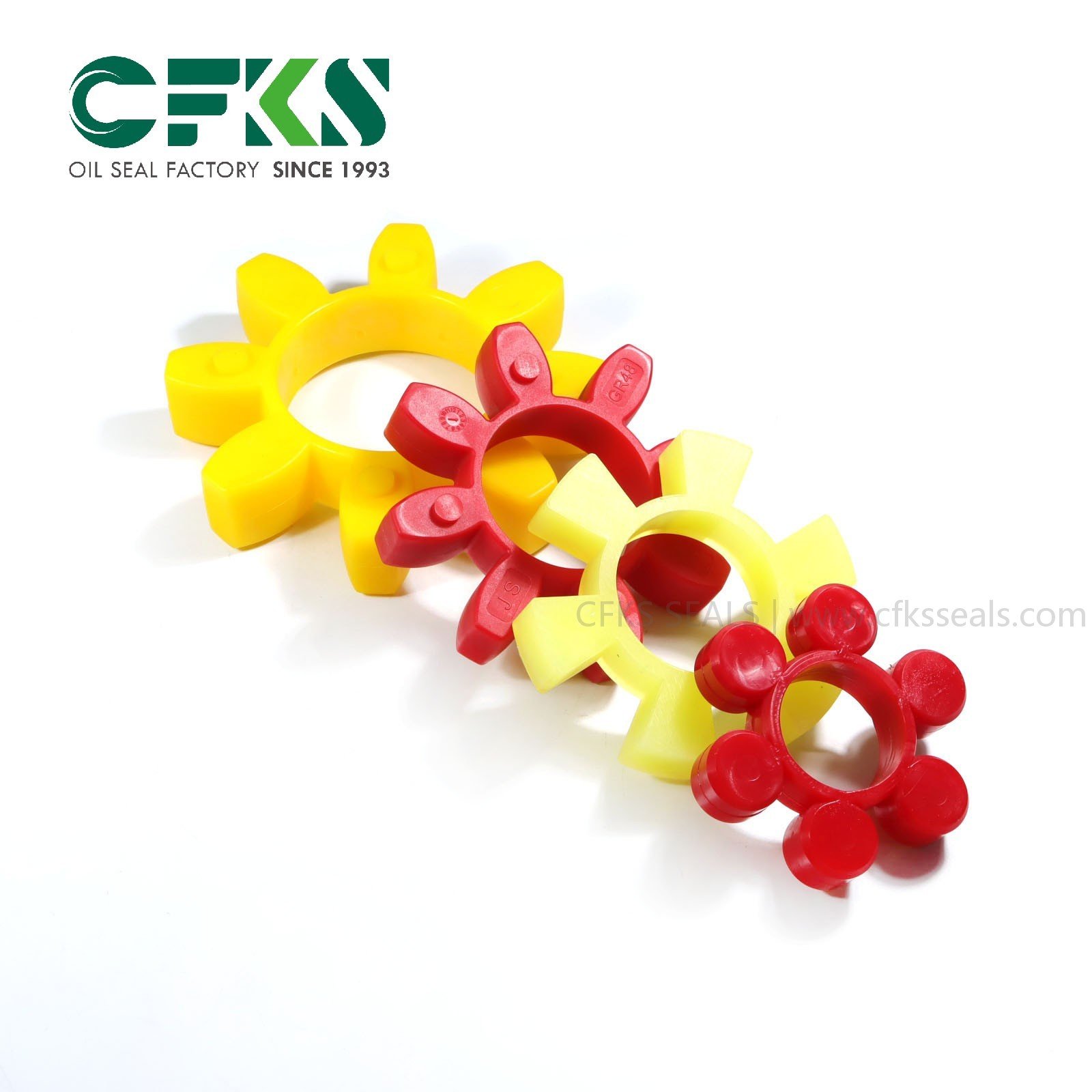
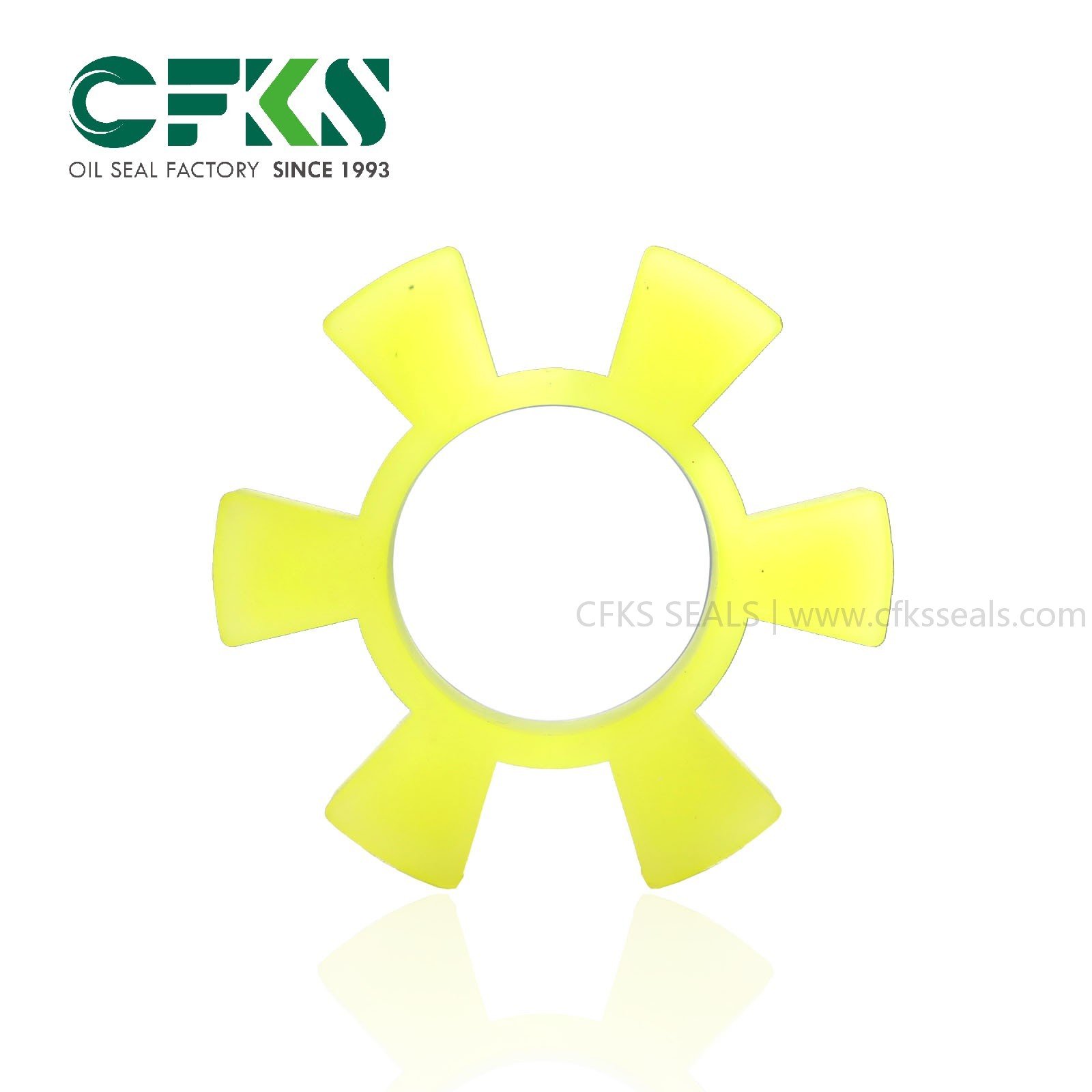
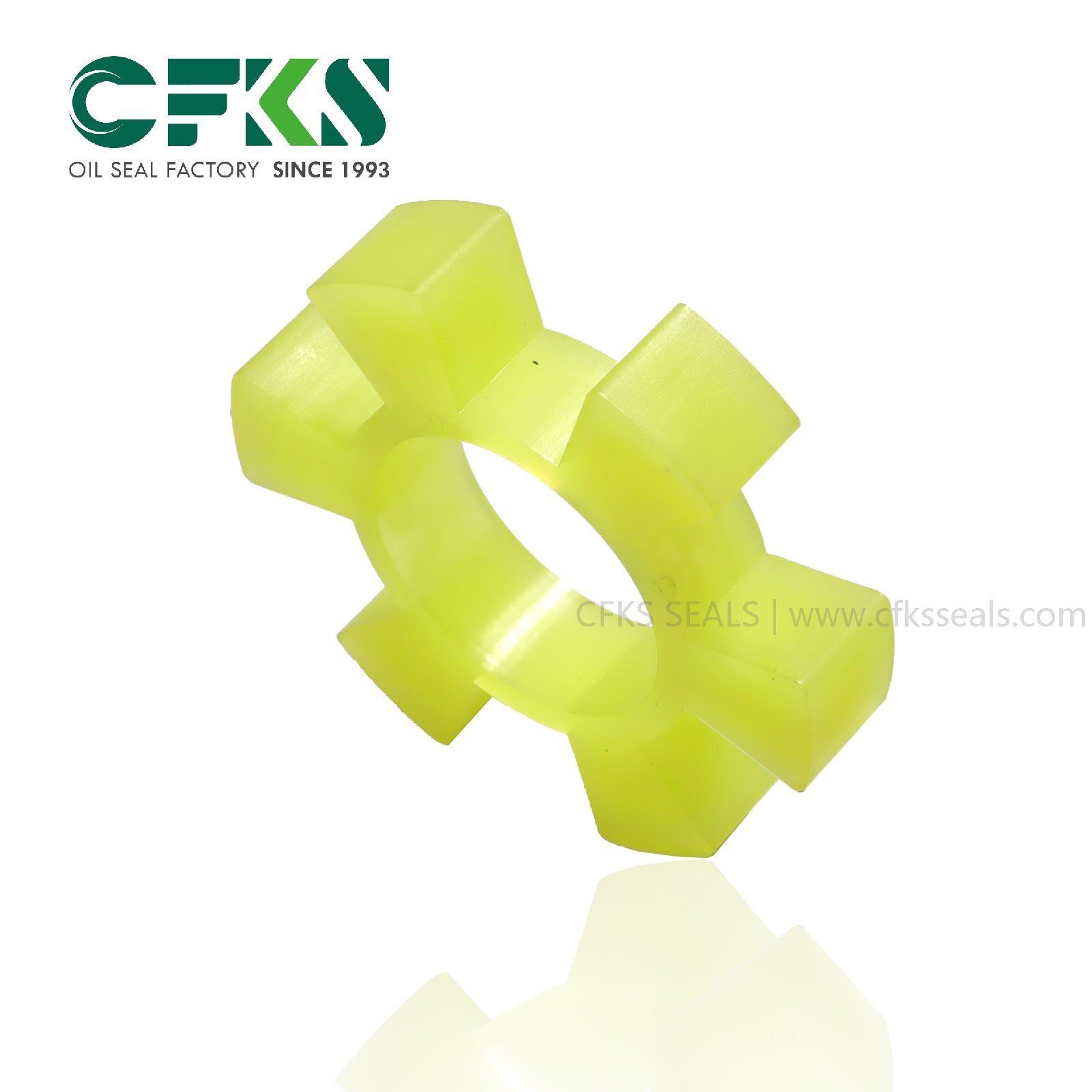
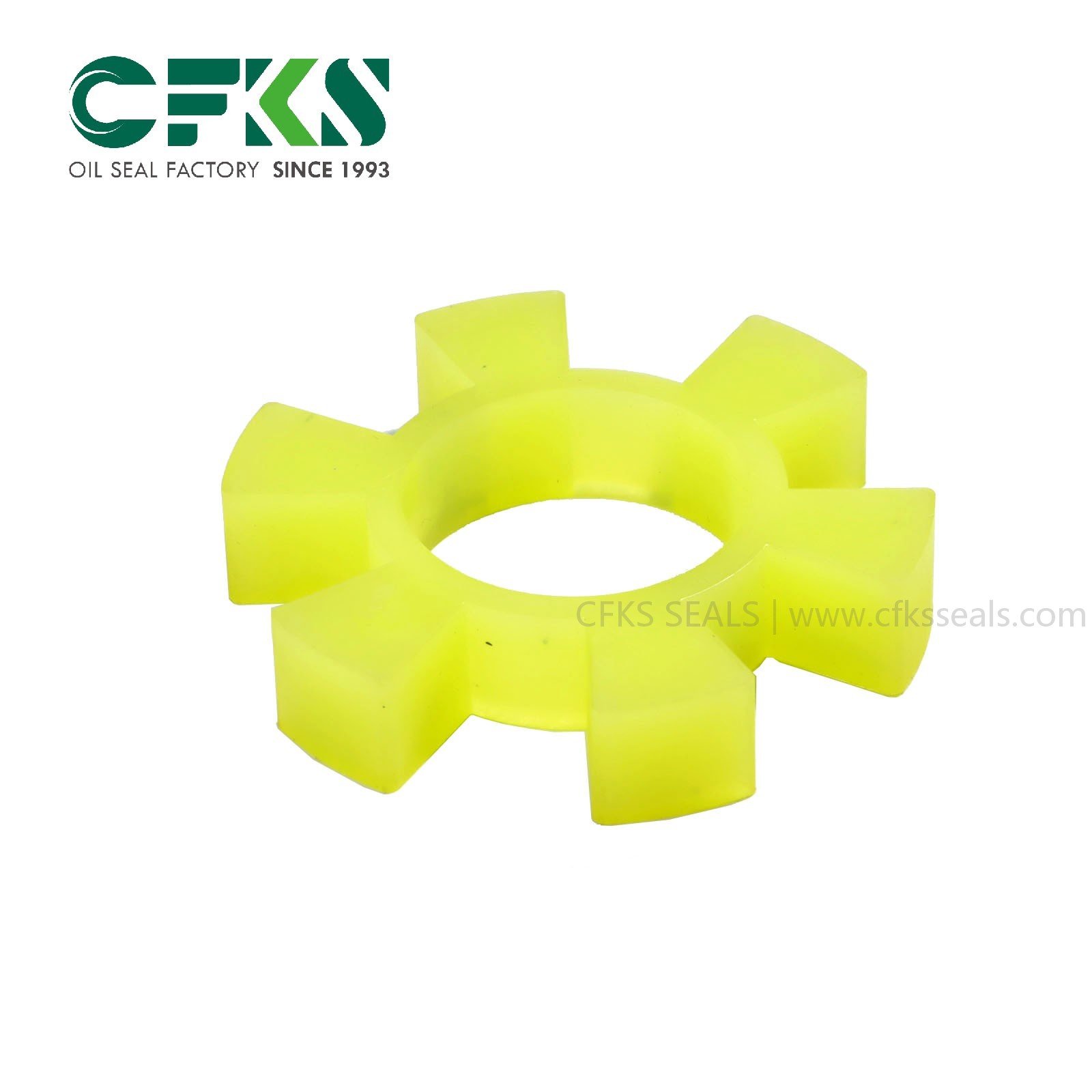
CFKS Flexible Yellow Spider Cushion Polyurethane Coupling Insert for Electric Motors

The CFKS Flexible Yellow Spider Cushion is a highly resilient elastomeric insert engineered for jaw-style couplings in electric motor applications. Operating as the critical dampening interface between driving and driven hubs, this polyurethane element protects sensitive motor bearings and connected equipment from sudden shock loads and misalignment-induced mechanical stress.

  • Maximum Vibration Dampening: Rated at 92 Shore A (Yellow) for optimal absorption of torsional resonance and mechanical noise.

  • Misalignment Compensation: Safely accommodates angular, parallel, and axial shaft deviations to extend bearing life.

  • Chemical & Wear Resistance: Premium polyurethane matrix resists degradation from industrial lubricants, ozone, and cyclic fatigue.

Find your sealing solution with CFKS — contact us for a quote.
Brand Name CFKS OEM  Accpetable
Material NBR FKM Silicone  Features  wear resistance
Dimensions Customized Certificate  ISO9001/TS16949
Type Coupling Spider  Packing 1 pc per bag


1️⃣ NBR Jaw Type Coupling Spider for Stable Power Transmission

The mechanical advantage of the Flexible Yellow Spider Cushion lies in its compressive power transmission architecture. Rather than relying on shear forces, the involute-profiled lobes of the insert are compressed between the interlocking jaws of the metallic coupling hubs. When an electric motor starts abruptly or encounters sudden torque spikes from the driven load, the elastomeric material deforms slightly. This controlled compression absorbs the kinetic energy of shock waves, dampening torsional vibration before it can propagate through the drivetrain and cause fatigue failure in rigid components like gear teeth or motor shafts.

2️⃣ Wear Resistant & Oil Resistant Performance

In industrial power transmission, the color of the elastomeric insert is not cosmetic; it designates the specific durometer and dynamic characteristics of the polymer. The “Yellow” CFKS spider indicates a 92 Shore A Polyurethane (PU) compound. Engineers specify this formulation when maximum vibration damping and misalignment tolerance are prioritized over absolute maximum torque capacity. Compared to traditional NBR rubber inserts, this specific PU matrix offers vastly superior tensile strength, excellent elastic memory retention after cyclic compression, and outstanding resistance to the synthetic oils and hydraulic fluids commonly found in industrial plant environments.

3️⃣Standard Size for Easy Installation

From a plant maintenance perspective, jaw couplings utilizing this flexible insert offer a highly reliable, “fail-safe” operating dynamic. Because the metal hubs physically interlock, the drivetrain will continue to transmit torque even if the polyurethane cushion is completely destroyed by a catastrophic mechanical overload. While this generates immediate audible clashing to alert operators, it prevents a sudden, dangerous loss of rotational control in critical pumping or lifting applications. For routine maintenance, the strict tolerances of the spider allow for “blind assembly,” meaning technicians can simply press the motor and driven shafts together without requiring complex visual alignment of the internal components.

Frequently Asked Questions (FAQ)

Why does my CFKS oil seal fail prematurely? Common causes and prevention tips2025-06-26T15:44:39+08:00

Premature oil seal failure can result from improper installation, poor shaft finish, incorrect material selection, or excessive pressure. To prevent this, ensure the shaft surface is smooth and within tolerance, use correct tools during installation, and choose seals made from materials compatible with your media and temperature.

How to correctly install a CFKS industrial oil seal to avoid leakage2025-06-26T16:04:32+08:00

Always clean the shaft and bore before installation. Use appropriate seal drivers to avoid deformation. Lubricate the lip before fitting to reduce friction during the first rotation. Ensure the seal is seated evenly and not tilted to avoid leaks.

What to do when your CFKS hydraulic seal is leaking under pressure2025-05-20T16:33:14+08:00

Check if the pressure exceeds the seal’s rated limit. Examine for wear, hardening, or improper installation. Replace the seal if damaged, and consider upgrading to a high-pressure CFKS seal variant. Also, verify that the housing and shaft are properly aligned.

How to choose the right CFKS oil seal for extreme operating environments2025-05-20T16:34:39+08:00

For high temperatures, aggressive chemicals, or abrasive environments, choose CFKS seals made of FKM, PTFE, or high-performance elastomers. Consider using seals with protective dust lips or metal casing. Our team can recommend the best fit for your application.


MESSAGE

Go to Top